From Masking to Mastery: Helping Neurodivergent Students Find Their Authentic Learning Voice
For so many neurodivergent students — whether they have ADHD, autism, dyslexia, or dyspraxia — school can feel like a performance. Every day, they mask their true selves to fit in with a system that wasn’t designed with their brains in mind. They work hard to appear focused, compliant, and “fine,” even when learning feels like walking uphill through fog.
At Minariel Tutors, we see this every day. Many of our students arrive not just tired from schoolwork, but tired from pretending — from years of trying to sound, act, or learn in the “right” way. Our goal isn’t just academic success; it’s helping them find something deeper: their authentic learning voice.
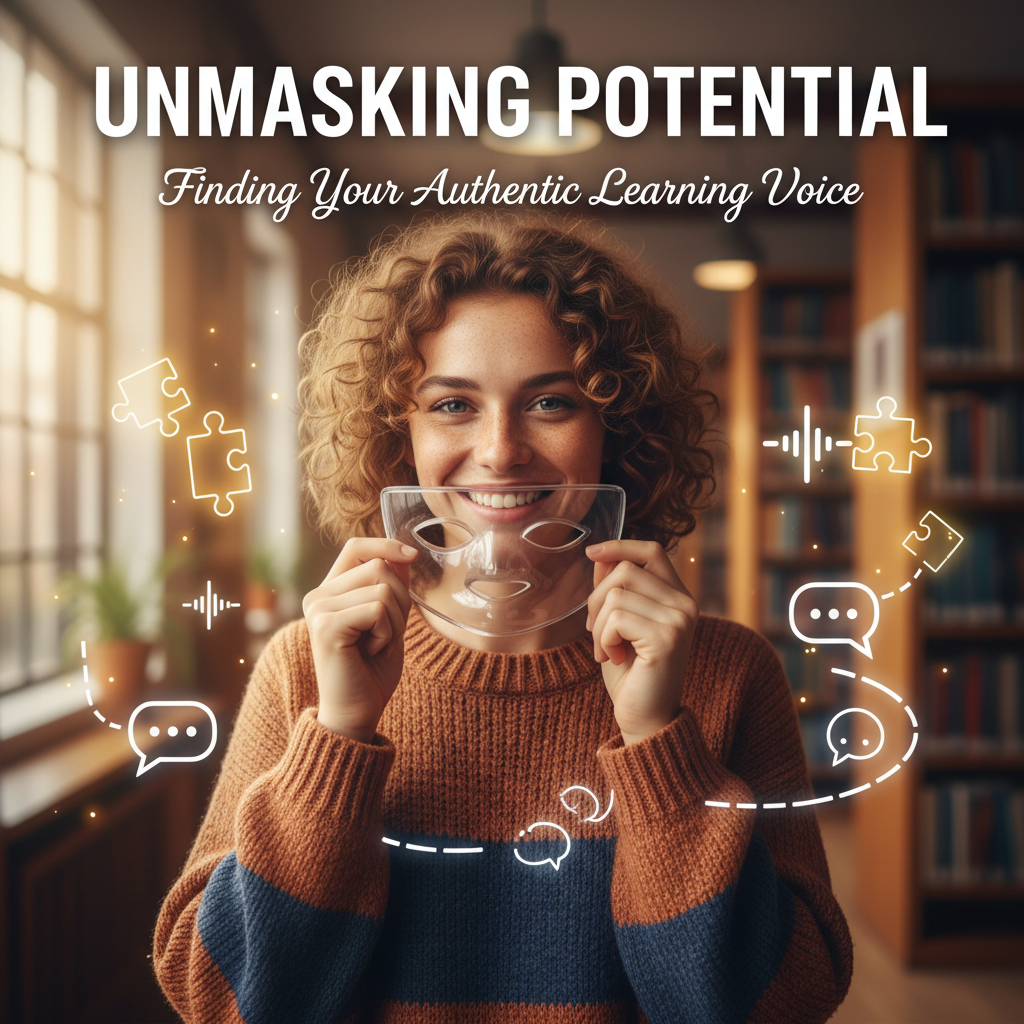
What Does “Masking” Mean?
Masking is when neurodivergent students hide their differences to fit in with neurotypical expectations.
Examples of Masking:
ADHD Masking
- A student with ADHD might force themselves to sit perfectly still even though movement helps them focus
- Suppressing fidgeting or stimming behaviours
- Appearing to listen while internally struggling to concentrate
- Over-preparing to compensate for executive function challenges
Dyslexia Masking
- A dyslexic learner might avoid reading aloud to hide embarrassment
- Memorising text instead of reading it
- Copying peers’ work to hide reading difficulties
- Refusing to participate in literacy activities
Autism Masking
- A child with autism might mimic social patterns to seem “normal,” even if it leaves them mentally drained
- Forcing eye contact despite discomfort
- Suppressing special interests to fit in
- Copying neurotypical body language and speech patterns
Dyspraxia Masking
- Avoiding physical activities or handwriting tasks
- Taking much longer on work to ensure neatness
- Hiding coordination difficulties
Masking often begins early — especially for girls — and becomes so habitual that students lose touch with their natural ways of thinking and expressing themselves. They learn to study in ways that don’t suit them, to ask fewer questions, to blend in rather than stand out.
But masking comes at a cost:
- Chronic anxiety and stress
- Low confidence and self-esteem
- Burnout and exhaustion
- A sense that “something is wrong with me”
- Late diagnosis and delayed support
- Mental health problems (depression, eating disorders)
For more information on neurodivergent masking, visit the National Autistic Society, ADHD UK, or Young Minds.

What Does It Mean to Have an “Authentic Learning Voice”?
Every student learns in a way that’s personal to them — the rhythm, environment, and strategies that help information actually stick. An authentic learning voice is when a student feels safe and confident enough to learn in their own way — to express their ideas without fear, to advocate for what works for them, and to stop apologising for being different.
At Minariel Tutors, we define it as:
The point where confidence, self-awareness, and learning style align — so the student isn’t just performing at school, but thriving as themselves.
It’s not about changing who they are to meet the system. It’s about helping them understand how their brain works best, and giving them the tools and language to express that.
What an Authentic Learning Voice Looks Like:
Self-Awareness
- Understanding their own learning style and needs
- Recognising strengths and challenges without shame
- Knowing what environments help them focus
Self-Expression
- Feeling safe to ask questions
- Expressing ideas in their own way (verbal, visual, written, movement)
- Not hiding their neurodivergence
Self-Advocacy
- Asking for what they need (“Can I stand while working?”)
- Communicating boundaries (“I need extra time to process”)
- Refusing to apologise for being different
Self-Acceptance
- Embracing their neurodivergent identity
- Seeing difference as strength, not deficit
- Trusting their own learning process

How We Help Students Find Their Learning Voice
At Minariel Tutors, we use a five-step approach to help neurodivergent students move from masking to mastery:
1. We Start with Self-Understanding, Not Content
Before diving into essays or equations, we ask:
- How do you learn best?
- What’s hard for you in the classroom?
- What feels easy?
By naming their strengths and struggles, students start to see patterns:
- “I understand better when I talk things through”
- “I need to move around to think”
- “Visual diagrams help me remember”
- “I focus better with background music”
Why this matters: Self-awareness is the foundation of self-advocacy. Students can’t ask for what they need if they don’t know what works for them.
2. We Encourage Experimentation
Some students remember through sound, others through visuals, colour, or story. We help them test different learning methods until they find what actually clicks — and then we build a system around it.
Learning Style Experiments We Use:
- Visual learners: Mind maps, colour-coding, diagrams, videos
- Auditory learners: Verbal explanations, discussions, audio recordings
- Kinaesthetic learners: Movement breaks, hands-on activities, standing desks
- Reading/writing learners: Note-taking, written summaries, journaling
Why this matters: There’s no one “right” way to learn. Experimentation removes shame and builds confidence.
3. We Remove Shame from Learning Differences
Too many students believe they’re “lazy” or “stupid” because they can’t learn like others. We reframe that narrative:
It’s not a lack of intelligence, it’s a mismatch in method.
Once students experience success their way, self-esteem follows naturally.
How we reframe:
- “You’re not lazy — your brain needs movement to focus”
- “You’re not stupid — you just need information presented visually”
- “You’re not slow — you’re thorough and thoughtful”
- “You’re not difficult — you’re advocating for your needs”
Why this matters: Shame blocks learning. Self-compassion unlocks potential.
For more on neurodiversity-affirming approaches, visit the ADHD Foundation or Autistic UK.

4. We Prioritise Emotional Safety
Students can’t find their voice when they’re scared of getting things wrong. Our sessions are built on compassion, humour, and understanding. Mistakes are treated as evidence of learning, not failure.
How we create emotional safety:
- Celebrate effort, not just outcomes
- Normalise mistakes as part of learning
- Use humour to reduce anxiety
- Validate feelings without judgment
- Build trust through consistency
Why this matters: The nervous system must feel safe before the brain can learn effectively.
For more on trauma-informed teaching, visit Young Minds or Trauma Informed Schools UK.
5. We Help Students Self-Advocate
Finding your learning voice isn’t just about knowing your style — it’s about communicating it. We coach students to express what helps them:
- “I focus better if I can move”
- “I need extra time to plan”
- “Can I use a laptop instead of handwriting?”
- “Visual instructions help me understand”
This builds confidence for school, university, and beyond.
Self-advocacy skills we teach:
- How to ask for reasonable adjustments
- How to explain your learning needs to teachers
- How to recognise when you need a break
- How to set boundaries around your energy
Why this matters: Self-advocacy is a life skill that extends far beyond academics.

Self-Acceptance Matters
When a neurodivergent student learns to trust their own process, they stop chasing impossible standards. They stop seeing difference as something to hide and start seeing it as a strength.
Shannon’s Story: From Masking to Self-Acceptance
For example, when I was younger, I thought being quiet, polite, and organised made me a ‘good’ student — but really, it was how I survived being autistic. I struggled with social cues, found group settings overwhelming, and often preferred to be alone.
At university, masking became exhausting — every interaction felt like a performance just to seem ‘normal.’ I’d come home drained, wondering why everyone else found social life so easy.
It took years to realise I wasn’t shy or antisocial — I was autistic, and my way of being in the world wasn’t wrong. It was just different, and now I see that difference as a superpower. I embrace my neurodiversity now and I’m grateful for the unique perspective it gives me.
At Minariel Tutors, this understanding is at the heart of what we do — helping students move from masking to self-acceptance, from surviving to being seen.

The Bigger Picture
Education systems are slowly learning that neurodiversity isn’t something to be “fixed.” It’s something to be understood and celebrated. When we allow students to learn in a way that suits them, they don’t just perform better academically — they grow in self-belief, independence, and wellbeing.
The Shift We’re Seeing:
From:
- Deficit-based language (“disorder,” “impairment”)
- One-size-fits-all teaching
- Compliance and conformity
- Hiding differences
- Punishment for “bad behaviour”
To:
- Strength-based language (“neurodivergent,” “different learning style”)
- Differentiated, flexible teaching
- Authenticity and self-advocacy
- Celebrating differences
- Understanding behaviour as communication
Our hope is that every neurodivergent learner we meet leaves not just with improved grades, but with the words to say:
“This is how my brain works. This is what I need. And that’s okay.”
For more on neurodiversity-affirming education, visit Neurodiversity Week or the British Dyslexia Association.
Frequently Asked Questions
What is masking in neurodivergent students?
Masking is when neurodivergent students hide their differences to fit in with neurotypical expectations. This might include suppressing stimming, forcing eye contact, hiding learning difficulties, or copying peers’ behaviour. Masking is exhausting and leads to anxiety, burnout, and low self-esteem.
How do I know if my child is masking at school?
Signs of masking include:
- Appearing fine at school but melting down at home
- Extreme exhaustion after school
- Anxiety about making mistakes
- Perfectionism or people-pleasing
- Avoiding asking for help
- Copying peers to fit in
If you suspect masking, talk to your child gently and seek specialist support.
What is an authentic learning voice?
An authentic learning voice is when a student feels safe and confident enough to learn in their own way — to express their ideas without fear, to advocate for what works for them, and to stop apologising for being different. It’s the alignment of confidence, self-awareness, and learning style.
How can I help my neurodivergent child find their learning voice?
Steps to support your child:
- Ask them how they learn best
- Experiment with different learning methods
- Remove shame from learning differences
- Create emotional safety at home
- Teach self-advocacy skills
- Seek specialist neurodivergent tutoring
Can masking cause mental health problems?
Yes. Chronic masking is linked to:
- Anxiety and depression
- Burnout and exhaustion
- Low self-esteem
- Identity confusion
- Eating disorders
- Self-harm
Early identification and support can prevent these outcomes.
How does Minariel Tutors help neurodivergent students?
We provide specialist 1-to-1 tutoring that:
- Starts with self-understanding, not content
- Encourages experimentation with learning styles
- Removes shame from learning differences
- Prioritises emotional safety
- Teaches self-advocacy skills
Both our co-founders are neurodivergent — we understand from lived experience.
Support for Neurodivergent Students
At Minariel Tutors, we specialise in working with neurodivergent learners — including those with ADHD, autism, dyslexia, and dyspraxia — to help them rediscover joy and confidence in learning.
If your child is struggling to find their learning voice, or masking to fit in, we’d love to help.
Our Approach Includes:
- 1-to-1 specialist tutoring tailored to neurodivergent learning styles
- Self-understanding and self-advocacy coaching
- Experimentation with different learning methods
- Emotional safety and shame-free learning
- Strength-based, neurodiversity-affirming teaching
Both our co-founders are neurodivergent — we understand the journey from masking to self-acceptance because we’ve lived it.
Book Your Free Consultation Today
Let’s discuss how we can support your child’s journey from masking to mastery.