
Why Behaviour Isn’t Always ‘Bad’: Rethinking Classroom Discipline for Neurodivergent Students
In many schools, behaviour is still seen through a binary lens — good or bad, compliant or defiant. Yet for many neurodivergent children — those with ADHD, autism, dyslexia, dyspraxia or other learning differences — behaviour is not a reflection of attitude or morality, but of communication.
What looks like distraction, avoidance, or disruption is often a signal that something deeper is happening: sensory overload, frustration, confusion, or exhaustion from trying to keep up in an environment not designed for them.
At Minariel Tutors, we believe that when we shift our lens from “What’s wrong with this child’s behaviour?” to “What is this child’s behaviour telling us?” — we open the door to real change.
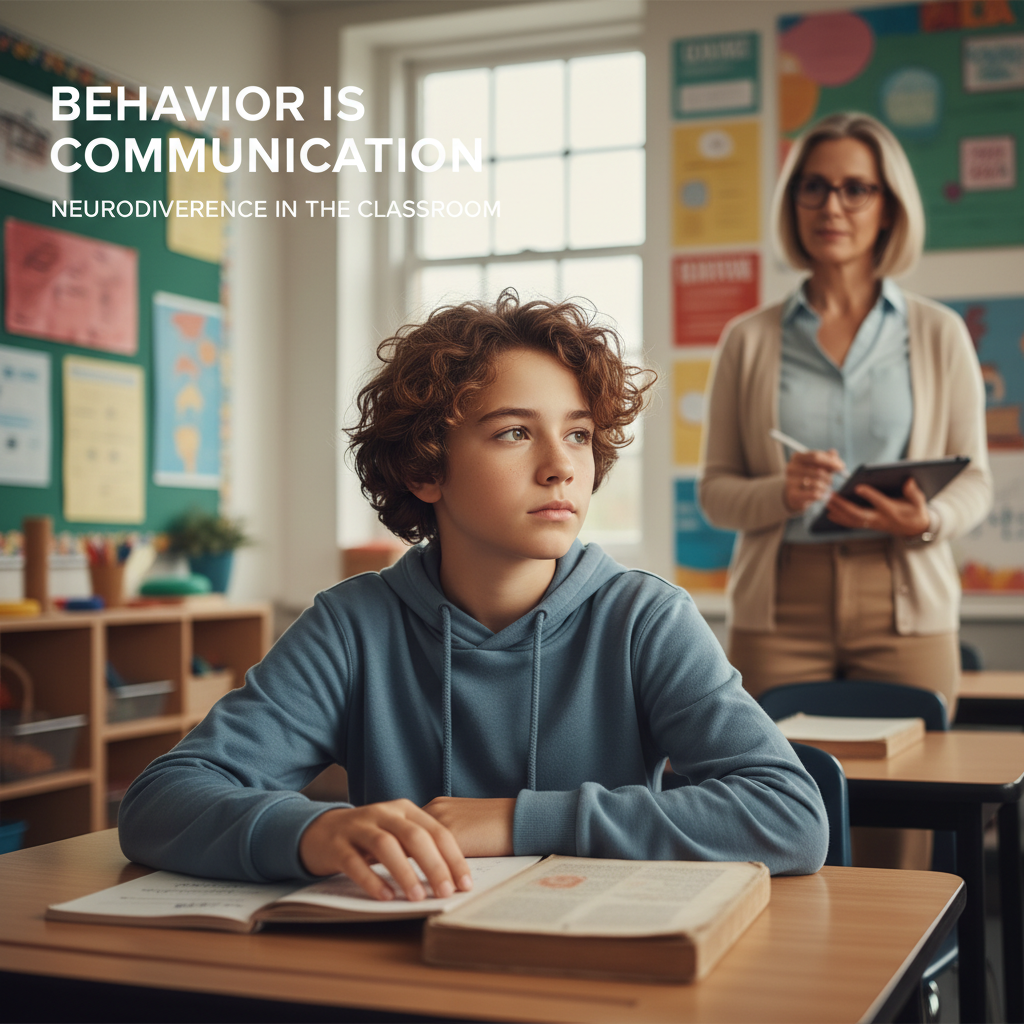
Understanding the Idea of ‘Bad Behaviour’
Traditional classroom discipline systems are often built around compliance. Reward charts, sanctions, detentions, and zero-tolerance policies assume that all children can regulate and respond in the same way. But for neurodivergent learners, these approaches can trigger shame rather than reflection.
How neurodivergence affects classroom behaviour:
ADHD
- Makes impulse control and focus difficult
- Leads to blurting out, fidgeting, or struggling to sit still
- Often mistaken for rudeness or defiance
- Executive function challenges affect organisation and time management
Dyslexia
- May cause frustration during reading aloud or written tasks
- Results in avoidance or acting out
- Anxiety about being “found out” or embarrassed
- Processing speed differences can look like disengagement
Dyspraxia
- Affects motor coordination
- Makes handwriting, organisation, or PE challenging
- Sometimes mistaken as carelessness or laziness
- Physical discomfort can lead to withdrawal or frustration
Autism
- Can come with sensory sensitivities or difficulty reading social cues
- May appear as withdrawal or emotional outbursts
- Need for routine and predictability often misunderstood
- Masking exhaustion can lead to meltdowns or shutdowns
When these differences go unrecognised, the behaviour is punished instead of supported — eroding self-esteem and reinforcing negative cycles of misunderstanding.
For more information on neurodevelopmental differences, visit the National Autistic Society or ADHD UK.

The Misconception: Behaviour = Willful Disobedience
One of the major misunderstandings is that behaviour is always a choice, and therefore bad behaviour means a choice to misbehave. But experts stress that conditions like ADHD and autism are neurodevelopmental — not behavioural disorders.
The term “behavioural disorder” is misleading because it implies moral choice. This misconception has real consequences:
Impact of misunderstanding neurodivergent behaviour:
- Children internalise shame and believe they are “bad”
- Punishment increases anxiety and reduces trust
- Self-esteem plummets, affecting academic performance
- Students disengage from learning entirely
- Mental health problems develop (anxiety, depression)
- Families feel blamed and unsupported
The reality: The mismatch between the child’s brain and classroom expectations often triggers behaviour. The child is not choosing to misbehave — they are responding to a system that doesn’t align with their needs.
Key insight: When we understand that ADHD, autism, dyslexia, and dyspraxia are differences in brain wiring, not character flaws, we can respond with support instead of sanctions.
For evidence-based information on neurodevelopmental conditions, visit NHS Neurodevelopmental Conditions or the ADHD Foundation.
The Hidden Side: Well-Behaved Doesn’t Mean Unaffected
It’s equally important to recognise that not all neurodivergent children show their struggles outwardly. Some mask their difficulties to fit in, follow rules, and avoid drawing attention to themselves.
Signs of masking in neurodivergent students:
- Appearing quiet and compliant in class
- Copying peers to “blend in”
- Avoiding asking questions or seeking help
- Exhaustion after school (meltdowns at home)
- Anxiety about making mistakes
- Perfectionism or people-pleasing behaviours
A quiet, “well-behaved” student might be expending enormous mental energy to stay focused, interpret social dynamics, or hide their anxiety about learning tasks.
Because these behaviours are invisible or interpreted as “good behaviour”, the underlying needs may go unnoticed, support delayed, and the child’s self-esteem may steadily decline.
The cost of masking:
- Chronic stress and anxiety
- Burnout and mental health problems
- Late diagnosis and delayed support
- Identity confusion and low self-worth
- Difficulty recognising own needs in adulthood
This is why early identification and support matter — even for students who appear to be “coping.”
For more on autistic masking, visit the National Autistic Society masking resources.

How to Support Children When Behaviour Isn’t Simply “Bad”
Here are key practical strategies for parents, tutors and schools to rethink behaviour and support neurodivergent learners:
1. Understand Behaviour as Communication
When a child interrupts, fidgets or withdraws, ask: What are they trying to say?
Questions to ask instead of punishing:
- Are they overwhelmed by sensory input? (noise, lights, textures)
- Are they unsure of what is expected? (unclear instructions)
- Are they bored because material is too easy? (need for challenge)
- Are they stuck because instructions are unclear or too fast? (processing speed)
- Are they anxious or worried about something? (emotional regulation)
- Are they tired or hungry? (basic needs)
Recognising behaviour as need means you respond with curiosity, not punishment.
This approach aligns with trauma-informed practice and restorative justice principles, which focus on understanding root causes rather than punitive measures.

2. Supporting Children Through Understanding, Not Control
Here are some effective, evidence-informed strategies:
Co-regulate before you correct
- Help the child feel safe and calm before discussing behaviour
- Use calm voice, body language, and proximity
- Validate their feelings: “I can see you’re feeling frustrated”
- Wait until the nervous system has settled
Provide movement and sensory breaks
- Especially for ADHD or dyspraxia, to reduce overstimulation
- Allow standing, stretching, or walking during lessons
- Offer fidget tools, stress balls, or sensory objects
- Build in regular breaks (every 20-30 minutes)
Use strength-based feedback
- Highlight effort, creativity, or resilience rather than compliance alone
- “I noticed you kept trying even when it was hard”
- Focus on progress, not perfection
- Celebrate unique thinking and problem-solving
Offer choice and autonomy
- Allow students to feel ownership of their learning, reducing frustration
- “Would you like to start with maths or English?”
- Let them choose where to sit, how to present work, or which task to tackle first
- Autonomy builds motivation and reduces power struggles
Collaborate with the child
- Ask what helps or what triggers stress, rather than making assumptions
- “What would make this task easier for you?”
- Involve them in creating support plans
- Respect their expertise on their own needs
For more on trauma-informed approaches, visit Young Minds.
3. Support Big-Picture Needs — Not Just Behavioural Symptoms
Rather than viewing the child through the lens of ‘behaviour to correct’, we look at these broader domains:
Executive functions
- Planning, organising, working memory
- Often weaker in ADHD/dyspraxia
- Support with visual schedules, checklists, timers
- Break tasks into smaller steps
Sensory processing
- The child may appear restless because of uncomfortable lighting or noise
- Provide sensory-friendly environments (soft lighting, quiet spaces)
- Allow sensory tools (weighted blankets, noise-cancelling headphones)
- Recognise that sensory needs are real, not preferences
Emotional regulation
- Frustration, anxiety or shame may drive “bad” behaviour
- Teach emotional literacy and coping strategies
- Provide safe spaces for regulation
- Model and practice co-regulation
Processing speed and comprehension
- What looks like disinterest may actually be a brain taking more time
- Allow extra time for tasks and responses
- Use multi-modal instruction (visual, auditory, kinaesthetic)
- Check understanding regularly without pressure
Bringing It All Together
When we shift our lens from “What’s wrong with this child’s behaviour?” to “What is this child’s behaviour telling us?” — we open the door to real change.
At Minariel Tutors, we believe every learner deserves a framework where:
Their brain style is respected and understood
- Neurodivergence is a difference, not a deficit
- We adapt teaching to the learner, not force the learner to adapt
Behaviour is responded to constructively, not punitively
- Curiosity replaces judgment
- Support replaces sanctions
They are taught how to learn and why they behave in certain ways
- Self-awareness builds self-advocacy
- Understanding their own brain empowers them for life beyond school
Their confidence grows
- Because they learn that being different isn’t wrong; it’s simply different
- Strengths are celebrated, not just compliance

Our Approach at Minariel Tutors
Our qualified tutors use inclusive teaching methods to help every learner feel seen, not misunderstood:
Practical strategies we use:
- Offer movement breaks, standing options or alternative seating
- Use visual schedules and checklists to help with organisation and planning
- Break tasks into short, achievable chunks with clear prompts
- Build in opportunities for sensory regulation (fidgets, quiet corners, hand-movements)
- Use multi-modal instruction (visual, auditory, kinaesthetic) to match different processing styles
- Celebrate effort and progress, not just outcomes
- Co-create learning goals with students
- Provide regular, specific feedback that builds confidence
Our tutors understand that:
- Behaviour is communication
- Every brain learns differently
- Neurodivergence is a strength, not a problem to fix
- Small adjustments can make huge differences

Frequently Asked Questions
Is my child’s “bad behaviour” actually a sign of neurodivergence?
Possibly. If behaviour is persistent, happens across multiple settings, and doesn’t respond to typical discipline, it may indicate ADHD, autism, dyslexia, dyspraxia, or other neurodevelopmental differences. Look for patterns: sensory sensitivities, difficulty with transitions, executive function challenges, or emotional regulation struggles. Consult your GP or request a SENCO assessment at school.
How can I tell if my child is masking their difficulties?
Signs of masking include:
- Appearing fine at school but melting down at home
- Extreme fatigue after school
- Anxiety about making mistakes or being “found out”
- Copying peers to fit in
- Avoiding asking for help
- Perfectionism or people-pleasing
If you suspect masking, talk to your child gently and seek professional assessment.
What should I do if my child’s school doesn’t understand neurodivergent behaviour?
Steps to take:
- Request a meeting with the SENCO (Special Educational Needs Coordinator)
- Share information about your child’s needs (diagnosis reports, strategies that work at home)
- Request reasonable adjustments under the Equality Act 2010
- Ask for a support plan or EHCP assessment if needed
- Consider private specialist tutoring to provide additional support
- Contact organisations like IPSEA for SEND legal advice
Can behaviour improve without medication?
Yes! While medication can help some children with ADHD, many neurodivergent students benefit significantly from:
- Environmental adjustments (sensory-friendly classrooms, flexible seating)
- Teaching strategies (visual supports, movement breaks, clear instructions)
- Emotional regulation support (co-regulation, safe spaces)
- Specialist tutoring tailored to their learning style
A holistic approach often works best.
How can private tutoring help with behaviour?
Specialist neurodivergent tutoring provides:
- 1-to-1 attention in a calm, sensory-friendly environment
- Individualised teaching that matches the child’s pace and style
- Positive reinforcement and strength-based feedback
- Movement and sensory breaks built into sessions
- Understanding and patience from tutors who “get it”
- Confidence building that transfers to school
Many parents report that behaviour improves when children feel understood and supported.
What is the difference between discipline and punishment?
Discipline = teaching, guiding, helping a child learn self-regulation
Punishment = imposing consequences to control behaviour through fear or shame
Neurodivergent children need discipline (teaching), not punishment (control). Effective discipline focuses on understanding needs, teaching skills, and building trust.
If Your Child’s Behaviour Is Labelled “Bad” — We’re Here to Help
If Your Child’s Behaviour Is Labelled “Bad” — We’re Here to Help
If you are a parent or guardian of a child whose behaviour is labelled “bad” but you suspect there’s more to it — or a school looking to better support neurodivergent learners — we’re here to help.
At Minariel Tutors, we provide:
Specialist 1-to-1 SEND Tutoring
- Tailored to ADHD, autism, dyslexia, dyspraxia and other neurodivergent profiles
- £100 per hour with tutors who have lived experience or specialist qualifications
- Sessions designed around your child’s strengths and needs
- Focus on building confidence, not just academic outcomes
What Makes Us Different:
- Both our co-founders are neurodivergent — we understand from lived experience
- All tutors have lived experience of neurodiversity or hold specialist SEND qualifications
- We believe behaviour is communication, not defiance
- We celebrate differences and build on strengths
- We work in partnership with families and schools
Book Your Free Consultation Today
Let’s discuss how we can support your child’s learning journey with understanding, compassion, and expertise.
Book Free Consultation | View Our Tutoring Services | Contact Us
Email:minarieltutors@gmail.com